Live Baccarat Guide
How live dealer baccarat works online — streaming, the squeeze, multiple camera angles, chat features, and how it compares to RNG tables.
Published August 10, 2026
What actually makes a table "live"
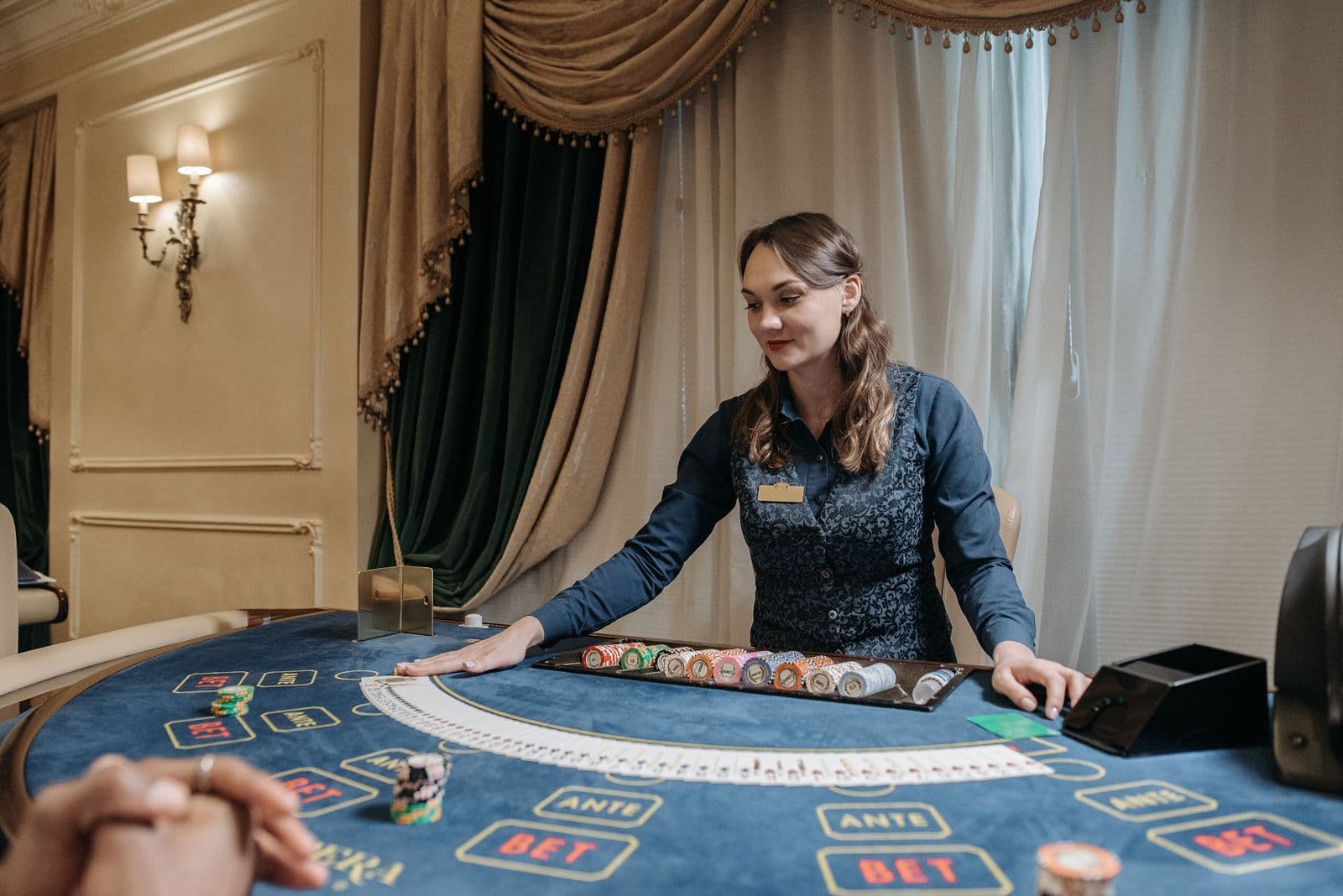
A live baccarat table is a real physical table, with a real dealer, a real shoe of physical cards, set up in a studio or a casino floor and streamed to your device in real time. Every card you see dealt is a real card being physically handled in front of a camera at that exact moment — nothing about the outcome is generated or simulated. What you're watching is a genuine casino round happening once, broadcast to everyone seated at that virtual table simultaneously, rather than a private, instantly-resolving RNG round played out just for you.
The rules underneath are identical to any other baccarat table — the same card values, the same natural check, the same third-card rule determining whether either hand draws once more. If you haven't already covered that ground, start with baccarat guide for beginners for the full rundown of how a hand actually resolves; this guide assumes that part is familiar and focuses specifically on what changes when a real dealer and a real shoe are added to the equation. For the general mechanics of placing bets and reading a table interface, see how to play baccarat online, and for a smaller, faster live format, see mini baccarat guide.
The squeeze, explained
The squeeze is the single most recognizable live-baccarat ritual, and it's worth understanding clearly because it's also the source of most of the confusion newcomers have about live tables. Rather than flipping a card face-up the instant it's dealt, the dealer (or, on some tables, a designated player) slowly bends back one corner, then peels the reveal open a little further, drawing out the moment before the card's value is finally shown. It's typically reserved for the decisive card in a close or high-value hand rather than applied to every single card in every round.
Here's the part that matters most: the squeeze has zero effect on the outcome. The card's value was fixed the instant it was dealt from the shoe — the slow reveal is pure theater, a piece of tradition inherited from baccarat's high-stakes, high-roller history on the casino floor. Nothing about how slowly or dramatically a card is revealed changes what's printed on it. Players who enjoy the squeeze do so for the atmosphere and suspense it adds, not because it offers any edge or additional information — by the time you're watching the corner peel back, the round's result already exists.
Camera angles and the physical shoe
Live baccarat studios typically run multiple camera feeds on the same table — a wide shot of the full layout, a closer angle on the card areas, and often a dedicated close-up used specifically for squeeze moments — and most interfaces let you switch between available angles or default to an automatic view that changes based on what's happening in the round. The shoe itself, holding the same six or eight decks used at any standard baccarat table, sits in view of the cameras throughout, and the physical handling of the cards — dealing, revealing, and discarding — is visible on screen rather than happening off-camera.
This visibility is part of what live tables are actually offering: verification that the process is real and unmanipulated, alongside the atmosphere. You can watch the deal happen rather than trusting a result generated behind the scenes, which is the core appeal for players who prefer live formats over RNG tables.
Bet timing on a live table
This is the most functionally important difference between live and RNG baccarat, and it's worth being explicit about it. A live table runs on a fixed, shared betting window — a countdown timer, visible on screen, gives every player seated at that table the same fixed amount of time to place or adjust bets before it closes and the dealer begins the round. Once it closes, it closes for everyone at once; there's no individual pacing, and you can't extend it by taking longer to decide.
This is a meaningful shift from an RNG table, where the betting window opens and closes entirely around your own actions, letting you play as quickly or as slowly as you like. On a live table, showing up ready — chip value selected, bet spot decided — before the countdown starts matters more, since a missed window just means sitting out that particular hand and waiting for the next one.
Chat and dealer interaction
Most live baccarat tables include a text chat panel alongside the video feed, letting you communicate with the dealer and, on many platforms, with other players seated at the same table. Dealers on staffed tables are typically trained to greet players, respond to simple chat messages between hands, and narrate what's happening on the felt — announcing totals, confirming a natural, or noting when a squeeze is about to happen. It's a genuinely social layer that RNG tables don't have any equivalent of, and it's one of the main reasons players who enjoy the format come back to live tables specifically rather than treating live and RNG as interchangeable.
None of the chat or interaction affects gameplay mechanically — it runs alongside the round rather than influencing it — but it's a real part of what distinguishes the live experience from a purely software-driven one.
Live vs. RNG rules: identical math, just presentation
It bears repeating plainly: live and RNG baccarat use exactly the same card values, the same natural rule, the same third-card chart, and the same standard payouts (Banker 1:1 minus commission, Player 1:1, Tie at its posted rate). Nothing about the house edge changes because a human dealer is involved instead of a random number generator — the underlying odds covered in baccarat guide for beginners apply exactly the same way at a live table as an RNG one. What changes between the two formats is entirely about how the round is delivered and paced, not what it's worth. For a full side-by-side comparison of the two, see online baccarat vs live baccarat; for the general mechanics of an online table regardless of format, see how to play baccarat online.
Connection considerations
Because a live table is a continuous video stream rather than a series of instantly-loaded static results, connection quality matters more here than it does on an RNG table. A stable, reasonably fast internet connection keeps the video feed smooth and the audio (where used) in sync, and most platforms will automatically drop stream quality first rather than disconnecting you outright if bandwidth tightens mid-session. It's worth noting that your bet and the round's recorded outcome are still tracked server-side independent of the video feed itself, so a brief stutter in the stream doesn't put a placed bet at risk — you'll simply see the resolved result once the connection catches back up.
If you're playing on a shared or unreliable connection, a quick check before committing to a session — loading the table and confirming the stream is smooth for a hand or two before betting seriously — is a reasonable habit, particularly at higher-stakes live tables where you're more invested in not missing a moment of the action.
Live baccarat on mobile
Live tables stream at the same visual quality on a phone or tablet as on desktop, with the video feed typically taking up most of the screen and the betting spots, chip tray, and timer arranged in a slimmer strip beneath it. The core experience — watching real cards dealt from a real shoe, in real time — carries over fully to mobile; the only meaningful consideration is that a stable connection matters even more on mobile data than on a fixed home connection, since a live video stream is more sensitive to signal drops than a static RNG round would be.
Frequently asked questions
Is the outcome of a live baccarat hand really unpredictable, or could the squeeze reveal it early? The outcome is fixed the instant the card is dealt, before any squeeze happens. The squeeze only affects how slowly the already-determined value is revealed to viewers — it has no bearing on what that value is.
Why do some live tables use a countdown timer while RNG tables don't? A live table serves one shared round to every player watching it, so betting has to close for everyone at the same moment before the dealer proceeds. An RNG table generates a private, individual round for you, so it can open and close its own betting window around your pace instead.
Can I play live baccarat for free before betting real money? Generally no. Because a live table involves a real dealer and shoe running in real time, most platforms reserve live formats for real-money play and offer free-play or demo modes only on RNG tables instead.
Does the dealer ever influence which cards are drawn? No. The dealer follows the same fixed third-card rule that governs every baccarat table — they're executing a predetermined chart, not making a judgment call about which cards to draw.
What happens if I miss the betting window on a live table? You simply sit out that round. The table proceeds to the deal without your bet, and a new betting window opens for the next hand as normal.
Are the odds different at a live baccarat table compared to RNG? No. Card values, the third-card rule, and payouts are identical in both formats — the difference is entirely in pacing and presentation, not in the underlying math.
Why do some players prefer live tables even though rounds take longer? Mainly for the atmosphere and verification of watching a real dealer and real cards, along with the social layer of chat and dealer interaction that RNG tables don't offer.
Is mini baccarat available in a live format? Yes — many platforms offer live mini baccarat tables, which use a smaller layout and typically move faster than standard live baccarat tables while keeping the same rules. See mini baccarat guide for more detail.
Do live tables ever use a different tie payout than RNG tables? It varies by individual table rather than by format — both live and RNG tables can be found offering either 8:1 or 9:1 on Tie, so it's worth checking the specific table's posted paytable rather than assuming based on format alone.
Can I switch camera angles during a live baccarat round? On many platforms, yes — interfaces typically offer a default automatic view along with the option to manually select between the available camera feeds, including dedicated close-ups used during a squeeze.
Where to go next
For a direct comparison of what you gain and give up choosing live over RNG, see online baccarat vs live baccarat. If you haven't walked through the general mechanics of an online baccarat table yet, how to play baccarat online covers that ground in full, and mini baccarat guide is worth a look if you're drawn to live tables but want a faster, smaller-stakes format.