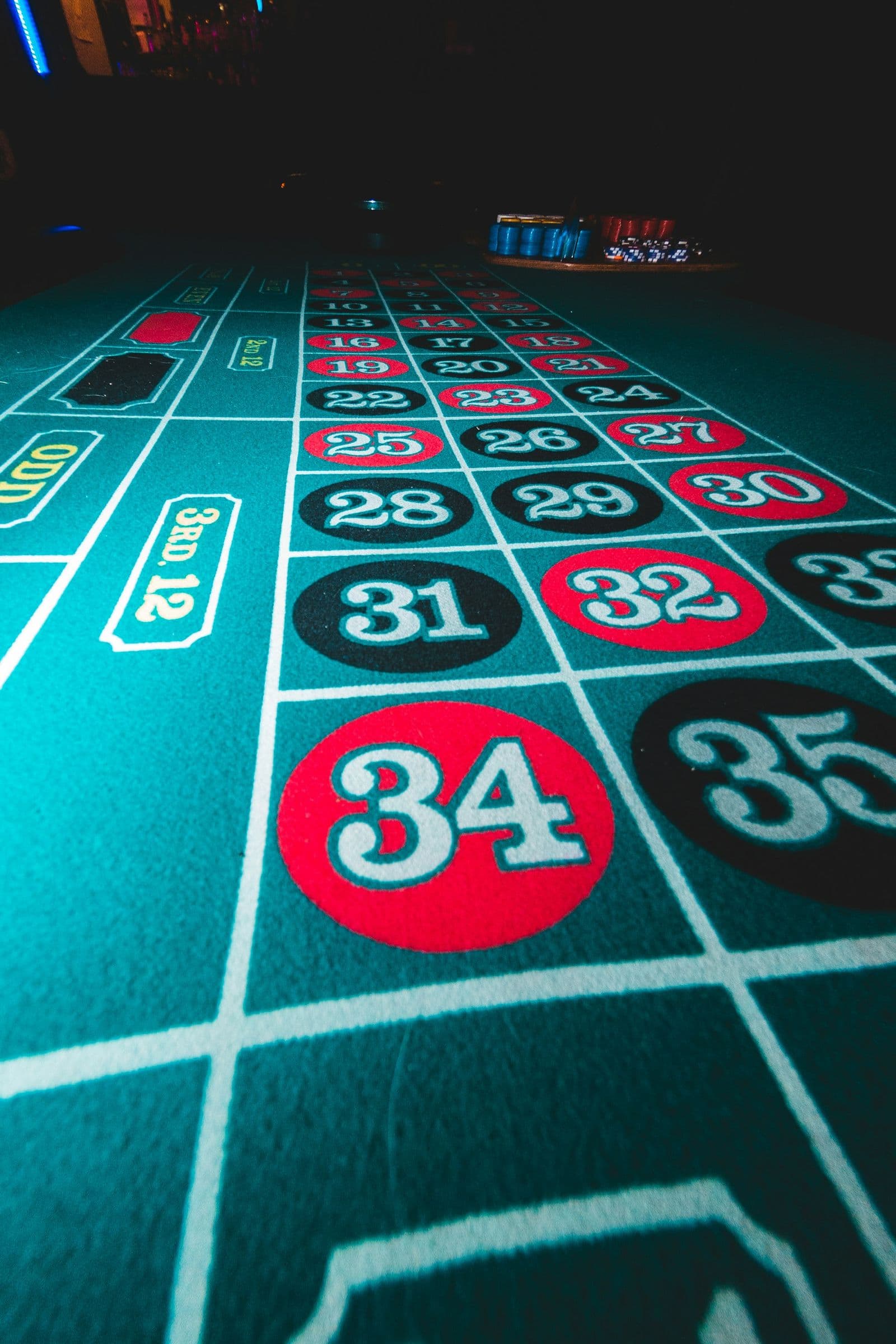
Roulette Betting Options Explained
Every roulette bet type explained in full — inside bets, outside bets, and call bets — with payouts, probabilities, and how to place each one.
Published July 30, 2026
What this guide covers
Roulette's betting layout can look busy on a first glance — a grid of numbers surrounded by a strip of category boxes, sometimes paired with an oval racetrack view — but every bet on it falls into one of a small number of well-defined types, each with a fixed, learnable payout. This guide walks through every standard bet type in detail: how to place it, what it pays, and how likely it is to win, along with practical guidance on choosing between them based on what kind of session you want. For the math behind why nearly all of these carry the same house edge, see roulette odds explained; for the special rules that apply to some of these bets, see roulette rules explained.
Inside bets versus outside bets, at a glance
Roulette bets split into two broad families. Inside bets are placed directly on or between numbers on the main grid — lower probability of winning per bet, higher payout when they do hit. Outside bets are placed on broader categories around the edge of the table — higher probability of winning, lower payout. Neither family offers better long-run value than the other on a standard European wheel; the choice is almost entirely about variance preference, covered in more depth toward the end of this guide.
Straight up
A straight-up bet is placed on a single number, including zero, by putting a chip directly in the center of that number's box on the grid. It's the highest-payout standard bet available — 35:1 — and correspondingly the least likely to win, with a true probability of 1/37 (about 2.7%) on a European wheel. Many players place a straight-up bet alongside a lower-variance outside bet specifically for the chance at this larger payout without staking their entire session on it.
Split
A split bet covers two adjacent numbers with a single chip, placed on the shared line between them (either horizontally or vertically adjacent on the grid, following the layout's actual arrangement). It pays 17:1 and wins with roughly double the probability of a straight-up bet, since it covers two numbers instead of one. This is a natural next step up in variance from a straight-up bet, letting you cover two numbers you like without doubling your total stake by placing two separate straight-up bets.
Street
A street bet covers an entire row of three numbers (for example, 1-2-3, or 4-5-6) with a single chip, placed on the outer edge line of that row. It pays 11:1. Street bets are a useful way to cover a small cluster of numbers — perhaps numbers with some personal significance, or numbers you've simply decided to focus on for a session — with a single, simply placed bet.
Corner
A corner bet (sometimes called a square bet) covers four numbers that meet at a single point on the grid, placed with a chip on that shared corner. It pays 8:1. Corner bets require the four numbers to form a genuine 2×2 block on the layout (like 1-2-4-5, or 23-24-26-27) — you can't combine four arbitrary numbers into a corner bet unless they happen to share this specific grid arrangement.
Six line (double street)
A six-line bet, also called a double street, covers two adjacent rows of three numbers each (six numbers total, like 1-2-3-4-5-6), placed with a chip on the outer edge line shared between the two rows. It pays 5:1. This is effectively two street bets combined into a single wager and a single chip placement, offering a moderate step down in payout in exchange for double the winning numbers compared to a single street bet.
Trio
A trio bet is a special three-number bet available only on combinations involving zero — covering 0-1-2 or 0-2-3, placed on the corner shared by zero and the relevant pair of numbers. Because it includes zero, it isn't available as a standard street bet (which requires three numbers in a clean row) and instead uses its own dedicated placement. It pays 11:1, the same as a standard street bet, reflecting its equivalent three-number coverage.
Basket / top line (American wheels only)
On American wheels specifically, the basket bet (also called the top line) covers the five numbers 0, 00, 1, 2, and 3 with a single chip placed at the corner shared by all five. It pays 6:1. This bet doesn't exist on European wheels, since European wheels lack the 00 pocket the bet is built around, and — as covered in roulette odds explained — it carries a meaningfully worse house edge (7.89%) than every other standard bet, making it worth avoiding even on American tables.
Red or black
Betting on red or black covers all eighteen numbers of that color, paying 1:1 (even money). It's one of the simplest, most intuitive bets on the table and among the most commonly placed by newer players, given how easy it is to understand at a glance — you're simply predicting the color of the pocket the ball lands in, nothing more.
Odd or even
Betting on odd or even covers all eighteen odd or eighteen even numbers (zero counts as neither), also paying 1:1. Like red/black, it's a straightforward, easy-to-track outside bet with a probability of winning just under 50% once zero's presence is accounted for.
High or low
Betting on high (19–36) or low (1–18) covers eighteen numbers in either half of the standard number range, paying 1:1. This is functionally similar to red/black and odd/even in terms of probability and payout — the three even-money bet types differ only in which specific eighteen numbers they group together, not in their underlying odds or payout structure.
Dozens
A dozens bet covers one of three consecutive blocks of twelve numbers — 1st dozen (1–12), 2nd dozen (13–24), or 3rd dozen (25–36) — placed in the designated box at the end of the relevant block on the layout. It pays 2:1 and offers a middle ground between the high-frequency, low-payout even-money bets and the lower-frequency, higher-payout inside bets.
Columns
A columns bet covers one of the three vertical columns of twelve numbers running the length of the grid, placed in the designated box at the base of the relevant column. Like dozens, it pays 2:1 and covers exactly a third of the non-zero numbers on the wheel — the two bet types are functionally similar in odds and payout, differing only in which specific twelve numbers each grouping includes.
A full payout reference table
| Bet type | Numbers covered | Payout | Approx. win probability (European) |
|---|---|---|---|
| Straight up | 1 | 35:1 | 2.7% |
| Split | 2 | 17:1 | 5.4% |
| Street | 3 | 11:1 | 8.1% |
| Corner | 4 | 8:1 | 10.8% |
| Six line | 6 | 5:1 | 16.2% |
| Trio (includes zero) | 3 | 11:1 | 8.1% |
| Basket / top line (American) | 5 | 6:1 | 13.2% (38-pocket wheel) |
| Dozen | 12 | 2:1 | 32.4% |
| Column | 12 | 2:1 | 32.4% |
| Red/Black, Odd/Even, High/Low | 18 | 1:1 | 48.6% |
Call bets: a brief overview
Beyond the standard inside and outside bets covered above, some European and French tables offer "call bets" placed via a racetrack view — pre-configured combinations of numbers based on their physical position on the wheel rather than the grid's mathematical arrangement. Voisins du Zéro, Tiers du Cylindre, and Orphelins are the three most commonly offered, each covering a different section of the wheel with a fixed multi-chip combination. These don't carry different odds than placing the equivalent individual bets manually — they exist purely as a faster way to bet on a section of the wheel. Full detail on how each specific call bet is structured is in roulette rules explained.
The snake bet
A less common special bet, offered on some tables, is the "snake bet" — a zigzag pattern covering the numbers 1, 5, 9, 12, 14, 16, 19, 23, 27, 30, 32, and 34, which forms a snake-like shape when traced across the standard number grid. It's placed with multiple chips across a specific pre-set combination of splits, similar in spirit to a call bet, though based on the flat grid's visual pattern rather than the wheel's physical layout. Not every table offers this bet, and where it is offered, it functions as a fixed combination bet rather than a genuinely distinct wager type with its own unique payout odds.
Choosing between bet types: variance, not value
Since the house edge is effectively identical across nearly every standard bet on a European wheel, choosing between inside and outside bets is really a question of variance preference, not value-hunting. Inside bets offer bigger potential payouts for the same stake but lose far more often; outside bets win more consistently but pay less per win. Neither is a mathematically "smarter" choice — the trade-off is purely about how you want your session's ups and downs to feel, not about finding better long-run value.
Betting for steady, frequent action
If you prefer a session with frequent small wins and a lower chance of a long losing stretch, outside even-money bets (red/black, odd/even, high/low) are the natural choice, winning close to half the time on a European wheel. This style of play tends to produce a smoother, more predictable session experience, at the cost of never producing a dramatic single-spin payout.
Betting for a shot at a big single-spin win
If you're drawn to the possibility of a large payout from a single spin, straight-up or split bets deliver the highest payout-to-stake ratio on the table, at the cost of winning considerably less often. A modest straight-up bet placed alongside a larger outside bet is a common way to combine both goals in the same round — steady action from the outside bet, with a real (if infrequent) shot at a much bigger win from the inside bet layered on top.
Combining bet types in one round
Many players place a mix of inside and outside bets in the same round — for example, a straight-up bet on a favorite number alongside a red/black bet for steadier action. This doesn't change the house edge on either individual bet; it simply spreads your total stake across bets with different win frequencies and payout sizes, shaping how a session feels rather than chasing better value. There's no limit on how many different bets you can combine in a single round beyond the table's own betting maximums.
Bet selection based on session length
If you're planning a longer session on a fixed budget, leaning toward lower-variance outside bets generally stretches your budget across more rounds, since you're less likely to lose your entire stake in a short losing stretch. If you're playing a shorter, more deliberately entertainment-focused session, higher-variance inside bets can make for a more eventful few rounds, accepting a higher chance of losing the full stake in exchange for a real shot at a bigger single-spin outcome. Neither approach is objectively better — it depends entirely on what you're looking for out of the session.
Common mistakes when choosing bets
A handful of avoidable mistakes show up often among newer players navigating the full bet menu. Misplacing a split, street, or corner bet slightly off-target on the grid is a common interface mistake, especially before you're fully familiar with a specific table's layout — worth double-checking before a betting window closes. Assuming a higher-payout bet type is inherently "better value" than a lower-payout one, rather than understanding they share the same house edge, is a common misconception covered fully in roulette odds explained. And placing the American top-line bet without realizing its meaningfully worse house edge is a costly mistake worth avoiding specifically.
How bet types interact with betting systems
If you're using a structured betting system covered in the roulette strategy guide, it's worth knowing that most published systems — Martingale in particular — are designed around even-money outside bets specifically, since those offer the highest per-spin win probability available on the wheel, minimizing (without eliminating) how often the system faces an extended losing streak. Applying the same progression logic to a high-variance inside bet like a straight-up number produces a considerably more volatile, less predictable pattern of results, even though the underlying house edge remains identical either way.
Bet types across different roulette variants
While this guide covers the standard bet menu found on nearly every roulette table, some variants introduce additional bet types layered on top of this standard set — Lightning Roulette's boosted-multiplier straight-up bets, or various game-show-style variants with their own bonus wagers. These additional bets don't replace the standard menu covered here; they're offered alongside it, with the standard bets typically paying their usual, unmodified odds. Full detail on how these variant-specific bets work is in online roulette variants explained and lightning roulette guide.
A note on minimums and maximums per bet type
Table limits often differ by bet type, not just by the broad inside/outside distinction — a straight-up bet frequently carries a lower maximum than an outside bet, given its considerably larger payout-to-stake ratio and correspondingly higher potential payout risk to the house. Always check a table's specific limits screen for the bet type you're planning to place in any meaningful size, rather than assuming a single blanket figure applies uniformly across the entire betting layout — full detail on how table limits work is in roulette rules explained.
Understanding what "payout" actually means
When this guide (and most roulette resources) states a payout like "35:1," it describes profit relative to your stake, not the total amount returned to you. A winning $10 straight-up bet at 35:1 nets you $350 in profit, and your original $10 stake is also returned, bringing your total balance increase to $360. This distinction matters most for even-money bets, where "1:1" means your $10 bet nets $10 profit, for a total return of $20 — easy to misread as only "getting your money back" if you're not used to how payout odds are conventionally expressed in roulette and casino games generally.
Worked dollar examples across bet types
Seeing actual dollar figures side by side makes the variance differences between bet types more concrete. A $10 straight-up bet that hits pays $350 profit; the same $10 spread across an even-money bet that hits pays only $10 profit — a 35-times difference in payout for an identical stake, offset by straight-up bets winning roughly eighteen times less often. A $10 dozens bet that hits pays $20 profit; a $10 corner bet that hits pays $80 profit, covering a third as many numbers. In every case, running the numbers through the house edge formula produces the same ~2.70% figure — the dollar amounts simply illustrate how differently that identical underlying edge can feel depending on which bet type delivers it.
The French origins of roulette bet names
Many roulette bet names in international use trace back to the game's French origins, which is worth knowing since some terminology can otherwise seem arbitrary. "En plein" is the formal French term for a straight-up bet; "à cheval" (literally "on horseback," referring to straddling a shared line) for a split; "transversale" for a street; "carré" (square) for a corner; "sixain" for a six line; and "colonne" and "douzaine" for columns and dozens respectively. Most English-language tables use the anglicized terms covered throughout this guide, but French terminology sometimes appears on the physical layout itself, particularly on tables styled after traditional French or European casino design, or within call-bet names like Voisins du Zéro and Tiers du Cylindre, which are conventionally kept in French even on English-language interfaces.
Which bets pair well together, and why
Certain bet combinations are popular specifically because of how their variance profiles complement each other. Pairing a dozens bet with a straight-up bet on a number within a different dozen extends your coverage across the wheel without fully overlapping your stake's risk profile — if the dozens bet misses, there's still a chance the straight-up bet independently hits, and vice versa. Pairing two different even-money bets that don't overlap (like betting both odd and 1–18 simultaneously) creates partial redundancy, since many numbers satisfy both conditions at once, which is worth understanding before assuming two simultaneous outside bets meaningfully diversify your coverage of the wheel — in practice, the overlap between certain outside bet pairs is often larger than it might initially appear.
Visualizing variance across the standard bet menu
| Variance level | Bet types | Typical experience |
|---|---|---|
| Very high | Straight up | Long stretches without a win, occasional large payout |
| High | Split, trio | Frequent losses, meaningful payout when it hits |
| Moderate | Street, corner | Balanced mix of loss frequency and payout size |
| Moderate–low | Six line | Wins more often than smaller inside bets, still a real payout |
| Low | Dozens, columns | Regular wins, moderate payout |
| Very low | Even-money outside bets | Frequent small wins and losses, minimal payout per win |
This isn't a ranking of quality — every row carries essentially the same house edge on a European wheel. It's simply a map of how differently the same underlying math can feel depending on which row you're playing from, useful for matching your bet selection to the kind of session experience you're actually looking for.
Adjusting your bet mix as a session develops
Some players deliberately shift their bet mix partway through a session — starting with lower-variance outside bets to build an initial cushion, then reallocating part of that cushion toward higher-variance inside bets once ahead, effectively playing with "house money" from a psychological standpoint even though the underlying math treats every dollar identically regardless of its origin. This is a personal session-management preference rather than a mathematically meaningful strategy — the house edge applies identically to profits from an earlier win as it does to your original deposited funds — but it's a common and reasonable way many players choose to structure a longer session's pacing and risk profile.
Bet types on the racetrack view versus the standard grid
It's worth being clear about the relationship between the racetrack view and the standard bet types covered throughout this guide: the racetrack doesn't introduce new payout structures, it simply offers an alternative way to place combinations of the same standard bets (mostly splits, corners, and straight-ups) based on the wheel's physical number arrangement rather than the grid's flat layout. A player who never touches the racetrack view and sticks purely to the standard grid isn't missing out on any bet types with genuinely different odds — only on a different, sometimes faster way of placing certain combinations of bets that remain available (just individually) on the standard grid regardless.
How online interfaces display active bets
Most online roulette tables visually confirm your active bets in real time — chips appear directly on the layout at the spot you clicked, often stacked to reflect the total value placed there, and many interfaces also list your active bets in a sidebar or summary panel showing bet type and amount. This dual confirmation (visual placement plus a text summary) is particularly useful for double-checking a more complex round involving several different bet types at once, since it's easy to lose track of exactly what's been placed once you've clicked several different spots on a busy layout. Taking a moment to review this summary before a betting window closes is a simple habit that catches most placement mistakes before they matter.
Adjusting bets before a round locks
Nearly every online roulette interface allows you to remove or adjust individual bets for as long as the betting window remains open, typically through a dedicated "undo" or "clear" control, or by clicking directly on an already-placed chip stack to reduce or remove it. This flexibility means there's rarely a reason to feel locked into an early bet placement decision — if you change your mind about a specific number or bet type partway through the betting window, adjusting it is normally just as simple as placing it was in the first place, right up until the window closes.
Betting minimums that apply to the whole round versus per bet
Some tables set an overall minimum total stake per round (a "table minimum") in addition to any per-bet-type minimum, meaning a player spreading a very small stake across many different bet types might still need to meet a combined floor for the round to be accepted. This isn't universal — many tables only enforce per-bet-type minimums with no separate combined floor — but it's worth checking a table's rules screen if you're planning to spread a modest total stake thinly across several different bet types in a single round, particularly at lower-stakes tables where this distinction is more likely to matter in practice.
Frequently asked questions
Which bet type wins most often? Outside even-money bets (red/black, odd/even, high/low) win closest to half the time on a European wheel, making them the highest-frequency standard bet available.
Which bet type pays the most per win? A straight-up single-number bet pays the most per unit wagered, at 35:1, but wins far less often than any other standard bet type.
Do inside and outside bets have different house edges? On a standard European wheel, no — nearly every bet type carries the same 2.70% house edge; see roulette odds explained for why that's true across almost the entire betting layout.
Can I combine four arbitrary numbers into a corner bet? No — a corner bet requires the four numbers to form a genuine 2×2 block on the grid's actual layout; you can't combine any four numbers of your choosing into a single corner wager.
What's the difference between a trio bet and a street bet? Both cover three numbers and pay 11:1, but a trio bet specifically includes zero (0-1-2 or 0-2-3), while a standard street bet covers three consecutive non-zero numbers in a clean row on the grid.
Is the American top-line bet worth placing? No — it carries a meaningfully worse house edge (7.89%) than every other standard bet on an American table, and is worth avoiding specifically.
Do call bets cost more than placing the equivalent bets individually? No — a call bet is simply a faster, pre-configured way to place a combination of standard bets; the total stake and payout structure match what you'd get placing the individual component bets manually.
Should I stick to one bet type or mix several in a round? Either approach is entirely valid — mixing bet types doesn't change the individual house edge on any of them, and the choice comes down to how you want a session's variance and pacing to feel.
Is the snake bet available on every table? No — it's a less common special bet offered on some tables but not universally; check a specific table's bet menu to confirm availability before assuming it's offered.
Do higher-payout bets ever offer better long-run value? No, with the sole common exception of the American top-line bet working against you specifically — otherwise, higher payouts on a European wheel are matched by proportionally lower win probability, keeping the house edge essentially constant across bet types.
What's the safest way to learn every bet type without risking money? Most RNG roulette tables offer a free-play or demo mode using virtual credits, which is a genuinely useful way to practice placing every bet type covered in this guide before wagering anything real — see how to play roulette online for more on getting started.
Does "35:1" mean I get my stake back too? Yes — the payout figure describes profit relative to your stake; your original bet is also returned on a winning spin, so a $10 straight-up win at 35:1 nets $350 profit plus your $10 stake back, for a $360 total balance increase.
Why do some roulette bet names sound French even on English-language tables? Roulette originated in France, and several bet names — particularly call bets like Voisins du Zéro — are conventionally kept in their original French form internationally, even on tables and interfaces otherwise fully translated into English.
Do betting on two overlapping outside bets actually double my coverage of the wheel? Not necessarily — many outside bet combinations overlap significantly (for example, many numbers satisfy both "odd" and "1–18" simultaneously), so the actual increase in wheel coverage from betting both can be smaller than it first appears.
Is the racetrack view a completely different set of bets from the standard grid? No — it offers an alternative, often faster way to place combinations of the same standard straight-up, split, and corner bets, based on the wheel's physical number order rather than introducing genuinely new bet types or payout structures.
Should beginners avoid inside bets entirely? Not necessarily — inside bets aren't inherently riskier in terms of long-run expected value, just higher variance. A small inside bet alongside a larger, steadier outside bet is a common and reasonable way for a beginner to get a taste of both styles in the same session.
Can I remove a bet after placing it, before the round locks? Yes — nearly every interface allows removing or adjusting individual bets for as long as the betting window remains open, typically via an "undo" control or by clicking directly on an already-placed chip stack.
Is there a minimum total stake per round, separate from per-bet minimums? Some tables enforce this, though it isn't universal — worth checking a table's rules screen if you're planning to spread a modest total stake thinly across several bet types in one round.
Do mobile roulette interfaces support every bet type covered here? Nearly always, yes — the core betting layout works identically on mobile, though some interfaces tuck less common options like the racetrack view or snake bet a layer deeper in the menu to fit smaller screens.