Joker Poker Explained
How a single wild joker changes video poker's math and hand structure in this 53-card variant.
Published August 3, 2026
What this guide covers
Joker Poker sits in an interesting middle ground between Jacks or Better and Deuces Wild: it adds a wild card, but only one, and that single change lands the game's math somewhere between the two. This guide covers the deck change, how it compares to Deuces Wild's approach to wild cards, and why "Joker Poker" isn't really one single game so much as a family of pay tables. For the broader landscape of variants, see video poker variants explained; for general hold-and-draw mechanics, see the video poker strategy guide.
The core rule: one joker added to the deck
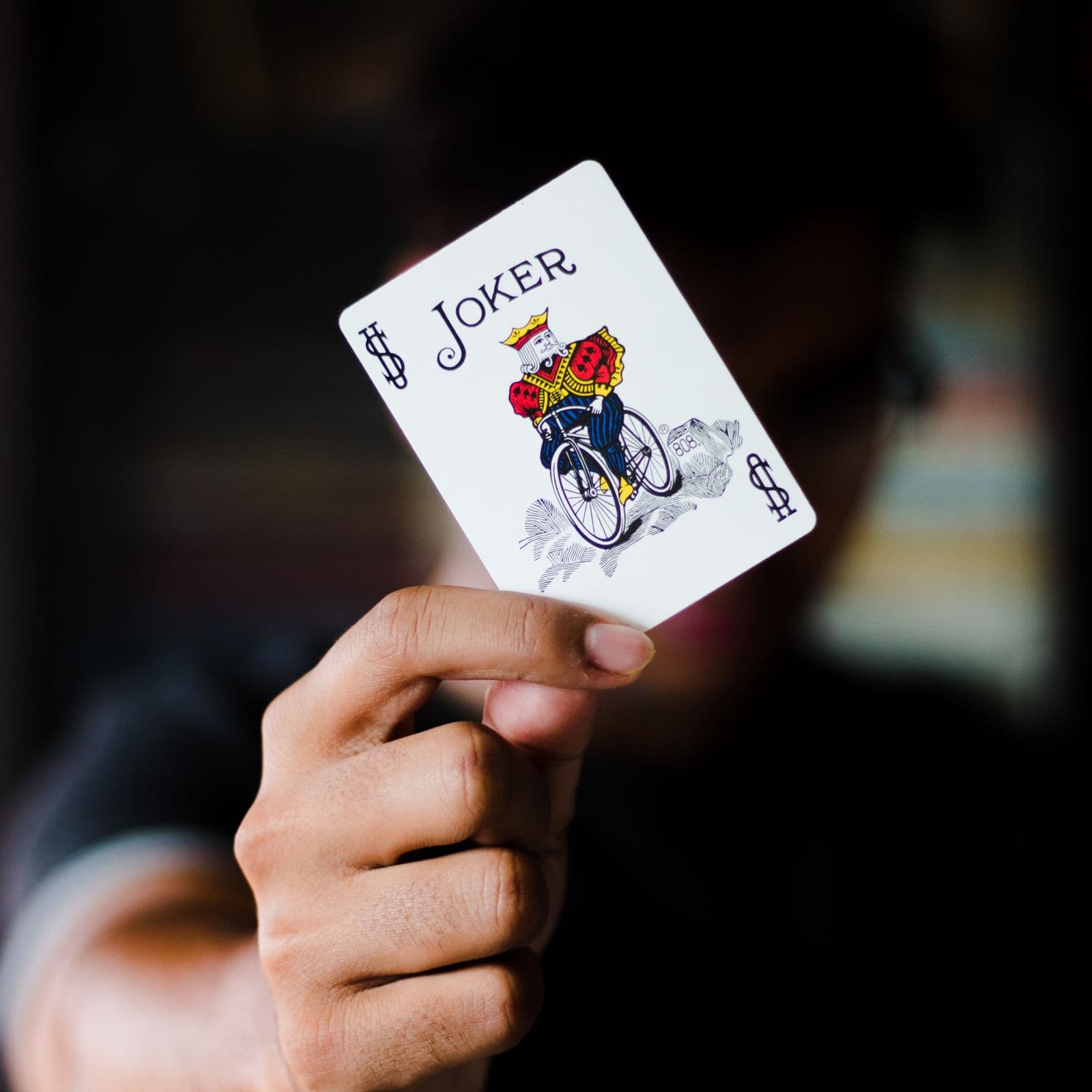
Joker Poker starts from a standard 52-card deck and adds a single joker, bringing the total to 53 cards. That joker is fully wild — it can stand in for any rank or suit needed to complete a hand, exactly the way a wild card works in Deuces Wild. The difference is scale: instead of four wild cards spread across the deck, there's exactly one.
That one-card difference matters more than it might sound. A single wild card still shows up in a meaningful share of hands over time, but nowhere near as often as one of four wild 2s does, so the overall shift in hand frequency is smaller and more contained.
How it compares to Deuces Wild
The clearest way to understand Joker Poker is by contrast with Deuces Wild, the other major wild-card variant. Deuces Wild makes roughly 7.7% of the deck wild (four cards out of fifty-two). Joker Poker makes roughly 1.9% of the deck wild (one card out of fifty-three). That's a large gap, and it shows up directly in how each game's pay table has to be built:
- Deuces Wild needs to raise its qualifying hand dramatically (typically to three of a kind) because wild-boosted strong hands are so frequent.
- Joker Poker needs a smaller adjustment, because one wild card doesn't inflate strong-hand frequency nearly as much.
The result is a game that generally sits between Jacks or Better's non-wild structure and Deuces Wild's heavily wild-adjusted one — both in how strategy plays out and in how the pay table is shaped.
Why "Joker Poker" isn't one fixed rule set
Unlike Jacks or Better, where the qualifying hand is essentially universal across pay tables, Joker Poker exists in several distinct real-world versions with genuinely different qualifying hands and payout structures. Some machines pay from a pair of Kings or better (sometimes described as "Kings or Better Joker Poker"). Others pay starting from two pair. The specific pay tiers above that threshold, and the exact payouts for each hand rank, also vary meaningfully between versions.
This isn't a minor labeling quirk — it means two games both called "Joker Poker" can have noticeably different strategy and value. There's no single universal RTP figure that applies to "Joker Poker" as a category the way there roughly is for 9/6 Jacks or Better. Anyone sitting down at a Joker Poker machine should treat reading the on-screen pay table as a mandatory first step, not an optional check, in the same way the pay tables guide recommends for every variant.
The five-of-a-kind category
One structural feature Joker Poker shares with Deuces Wild and doesn't share with Jacks or Better is the five-of-a-kind hand. In a standard 52-card deck with no wild cards, five of a kind is mathematically impossible — there are only four cards of any given rank. Once a wild joker enters the deck, though, it can duplicate a rank that's already represented four times over, making five of a kind achievable and giving it its own payout tier, usually well above four-of-a-kind and below a royal flush. It's a small but telling example of how adding even a single wild card doesn't just adjust existing categories — it can create new ones that didn't exist in the base game.
What playing Joker Poker actually feels like
Compared to Jacks or Better, Joker Poker hands land wild cards often enough to notice — drawing a joker into a hand is a genuinely different feeling than any card in a non-wild game, since it instantly upgrades whatever you're holding. But compared to Deuces Wild, that moment happens far less frequently, since there's only one joker instead of four wild 2s in play. The overall session rhythm sits closer to Jacks or Better than to Deuces Wild for that reason — steadier, with the wild card functioning more as an occasional bonus than a constant structural feature of the game.
Who Joker Poker suits
Joker Poker is a reasonable pick for players who've gotten comfortable with Jacks or Better and want to try a wild-card game without jumping straight to the higher-variance, more heavily restructured math of Deuces Wild. It's also a genuinely different strategic exercise, since holding decisions change noticeably whenever a joker appears in a dealt hand — reviewing hand rankings is worth doing before playing, since the presence of a wild card changes which draws are worth pursuing compared to a standard hand.
Frequently asked questions
How many cards are in a Joker Poker deck? Fifty-three — a standard 52-card deck plus one joker, which is fully wild.
Is Joker Poker's wild card as impactful as Deuces Wild's? No. One wild card out of fifty-three cards affects hand frequency far less than four wild 2s out of fifty-two, which is why Joker Poker's qualifying hand and pay table sit closer to Jacks or Better's structure.
Do all Joker Poker machines pay from the same qualifying hand? No — real-world versions vary, with some paying from Kings or better and others from two pair. Always check the specific machine's pay table.
Why does Joker Poker have a five-of-a-kind category? Because the wild joker can duplicate a rank that already has four natural cards, making five of a kind achievable — something impossible in a standard, wild-free deck.