Video Poker vs Blackjack: Which Game Has Better Odds?
Comparing video poker and blackjack head-to-head on odds, skill requirement, pace, and which gives players the better long-run value.
Published July 31, 2026
What this guide covers
Video poker and blackjack are the two games most often recommended to players who want their decisions to actually matter, and both can reach genuinely low house edges with correct play. This guide compares them directly — how their decisions are structured, how their best-case odds stack up, and what kind of player each one suits. For a broader look at video poker itself, see the video poker guide; for the reasoning behind correct hold decisions, see the video poker strategy guide.
Both are "correct decisions matter" games — structured differently
Unlike slots or roulette, where no decision changes the underlying odds, video poker and blackjack both reward playing correctly. But the shape of that decision-making is quite different. Blackjack strategy responds to two visible pieces of information — your own hand and the dealer's upcard — and can unfold across a sequence of live decisions within a single hand: hit, stand, double down, or split, sometimes several times over as the hand develops. Video poker strategy is a single decision made once per hand, with no opponent card to react to at all — you're holding cards against a fixed pay table, not against anything the "dealer" is showing.
Best-case odds: closer than most players assume
At their best, the two games are genuinely comparable. Full-pay 9/6 Jacks or Better video poker, played with perfect strategy, reaches roughly 99.54% RTP — about a 0.46% house edge. Blackjack with player-friendly rules and perfect basic strategy commonly reaches a house edge cited around 0.5%. That puts them within a fraction of a percent of each other at their respective bests. What matters more than the game itself is the specific version you're sitting down to: a short-pay video poker machine or a blackjack table with unfavorable rules (like a reduced blackjack payout or restrictive doubling rules) can each erase that edge entirely, regardless of which game you picked. Full detail on video poker's odds math is in video poker odds and RTP explained; for blackjack's side of that comparison, see blackjack odds explained.
No opponent vs. a dealer
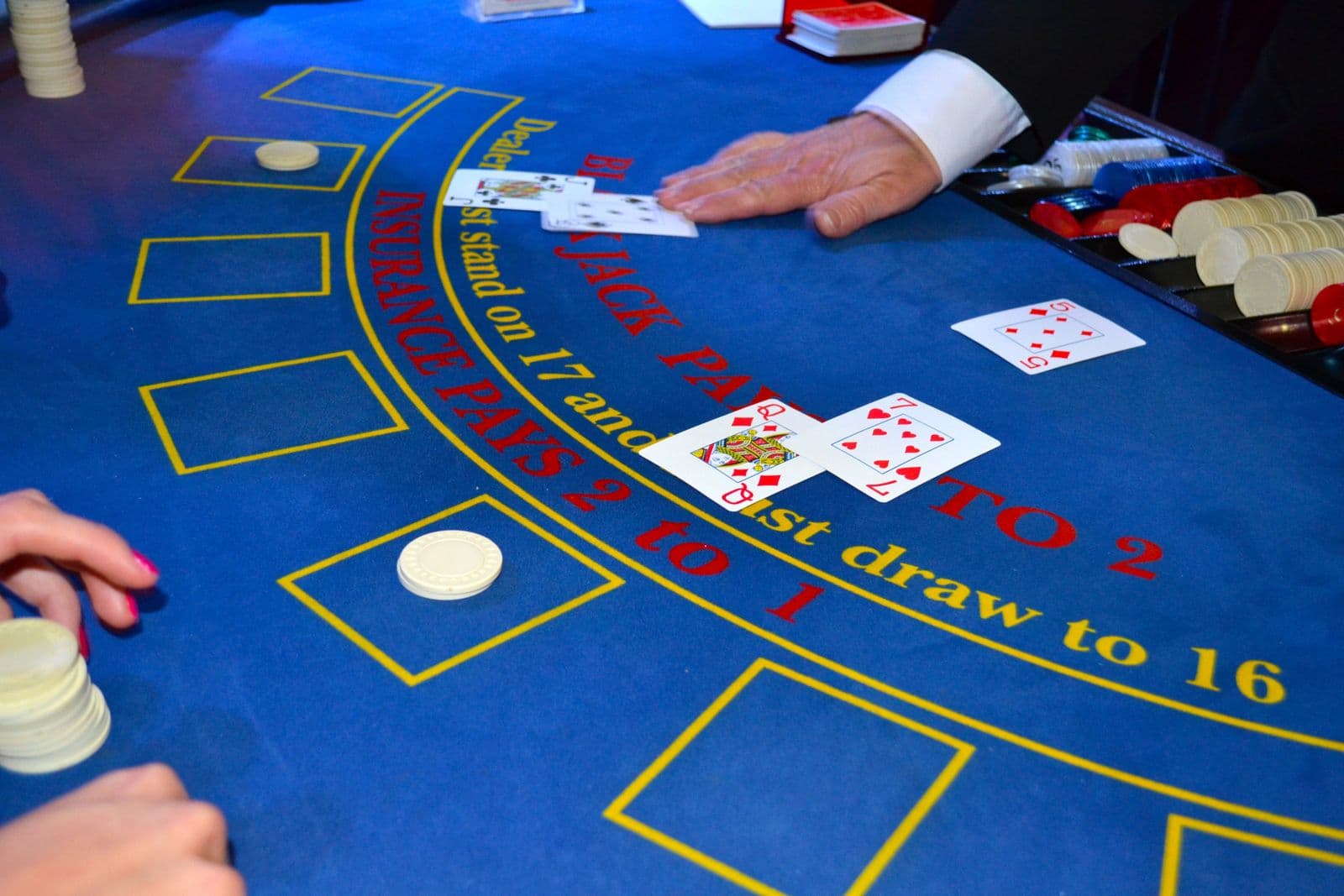
Video poker has no one to play against in any interactive sense — there's no dealer to react to, bluff, or read, and no other player's hand affects yours. Blackjack is the opposite: you're playing directly against a dealer who follows a fixed, published set of rules (typically standing on 17 or hitting soft 17, depending on the table), and every decision you make is made in response to that dealer's visible card. If part of what you enjoy about casino games is the sense of playing against something, blackjack provides that in a way video poker structurally can't.
Pacing
Video poker hands resolve in seconds, with nothing to wait on beyond your own decisions — there's no other player at the machine and no shared table pace to accommodate. Blackjack can be slower, especially at a live or multi-seat table where other players' decisions, splits, and doubles all play out before the hand comes back around to you. Solo and first-person blackjack formats close much of this gap by removing other players from the equation, but a standard live blackjack table will generally move at a slower pace than a video poker machine hand for hand.
Learning curve
Blackjack's basic strategy is a single chart, tied to a specific rule set, that applies to every hand you're dealt at that table — learn it once, and it's valid for as long as those table rules hold. Video poker strategy is less portable: the correct hold depends on both the variant (Jacks or Better, Deuces Wild, Joker Poker, and so on) and the exact pay table in play, meaning a chart that's optimal for one 9/6 Jacks or Better machine isn't necessarily optimal for an 8/5 version of the same game. In practice this means video poker players need to identify the pay table they're sitting down to and reference the right chart for it, rather than relying on one memorized chart across every machine with the same name.
Which suits which player
Players who like a single, well-known strategy chart, and who enjoy the sense of playing against a dealer, tend to prefer blackjack — it's a more social, more reactive game by design. Players who prefer a self-paced, no-opponent format with fully transparent and independently calculable odds tend to prefer video poker, especially once they've put in the (variant-specific) work to play close to optimal strategy.
Variance and how losses feel
The two games can also feel different in how their variance plays out over a session, even at similar theoretical house edges. Blackjack outcomes are generally close to binary within a hand — you win, lose, or push close to your original bet most of the time, with doubles and blackjacks adding some spread. Video poker's variance is more concentrated at the top of the pay table: most hands lose or pay small amounts, while the Royal Flush and other top-tier hands carry outsized payouts that happen rarely. Over a long session both games converge toward their respective house edges, but the shape of the ride getting there is noticeably different, and it's worth knowing which style of variance you're more comfortable sitting through.
Bankroll and bet sizing considerations
Blackjack bet sizing is usually flexible hand to hand, with no structural bonus tied to a specific bet level. Video poker ties its best payout specifically to max-coin play, which means bankroll planning looks a little different: dropping to a lower denomination to comfortably afford five coins generally preserves more of a game's return than betting fewer than five coins at a higher denomination, since betting below max coin forfeits the Royal Flush bonus multiplier entirely.
The bottom line
Neither game has a decisive edge over the other at its best — both can get remarkably close to even money with correct play, and both punish players who skip the strategy work. The real choice comes down to preference: a single strategy chart and dealer interaction versus a self-paced, transparent, no-opponent game where the odds are calculable to the decimal point from the pay table alone.