Baccarat Variants Explained
Punto Banco, mini, live, and Chemin de Fer compared — how each baccarat variant differs in rules, pace, and where to find it online.
Published August 10, 2026
One game, several formats
It helps to separate two very different questions that both get labeled "baccarat variants": how is the game presented and paced, and how are the rules structured underneath that presentation. Most of what you'll actually encounter, especially online, only differs on the first question — the table looks different, moves at a different speed, or is delivered through a different medium, while the cards behave exactly the same way underneath. A much smaller set of variants differ on the second question, changing who deals, who decides, and who's financially on the other side of a hand. Keeping that distinction in mind makes the rest of this guide easier to place — most of what follows is about presentation, and only two entries are genuinely about rules.
"Baccarat" covers more ground than a single ruleset. Most of what's labeled baccarat online is a version of Punto Banco, the standardized, fully automatic game described throughout this site, but that standard game shows up in several distinct formats — mini tables, live-streamed tables, speed variants — and sits alongside older, structurally different variants like Chemin de Fer and Baccarat Banque that most players will never actually encounter but are worth understanding to see what makes the standard game standard. This guide rounds up every variant in one place, with a comparison table at the end for a quick side-by-side reference. For the full rules and betting foundation first, start with the baccarat guide for beginners.
Punto Banco — the standard
Punto Banco is the version of baccarat you'll meet at the overwhelming majority of online and modern land-based tables, to the point where "baccarat" and "Punto Banco" are effectively interchangeable in everyday use. Its defining trait is that everything is automatic: two cards are dealt to each of Player and Banker, naturals (an 8 or 9) end the hand immediately, and any third cards follow a fixed chart with no discretion for players or the dealer. Card values, scoring, and the three core bets (Banker, Player, Tie) — along with their approximate odds and house edges — all describe Punto Banco specifically, even where this site and others just call it "baccarat." See punto banco explained for the complete detail on this ruleset and why it became the default.
Mini baccarat
Mini baccarat keeps Punto Banco's rules completely intact and changes the format around them: a smaller table (physically, in land-based versions), a single dealer handling all cards, and a noticeably faster pace than a standard table. Online, where there's no physical table to shrink, this mostly translates into a more compact interface and quicker rounds. Mini baccarat tends to carry lower minimum bets than standard tables and is the format most commonly found both at lower stakes and on mobile devices, where a fast, simplified layout suits the screen better than a wide, detail-heavy standard table. See mini baccarat guide for the full breakdown.
Live baccarat
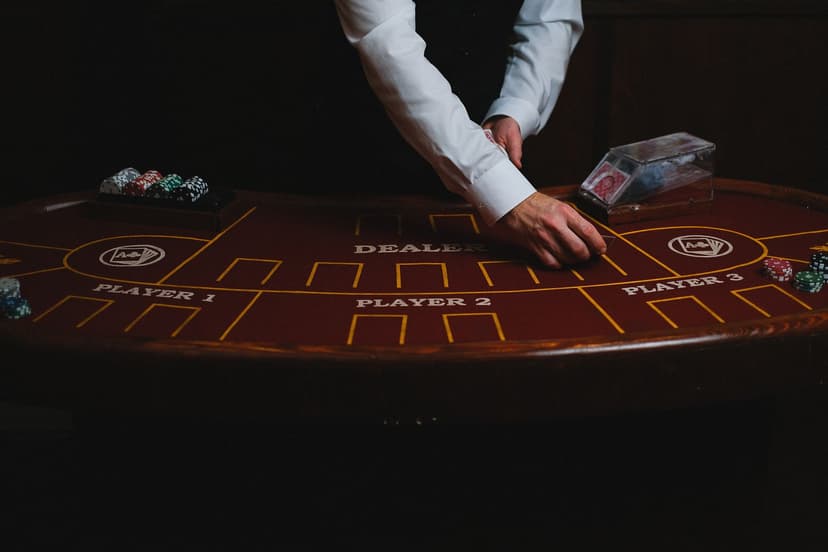
Live baccarat runs the same Punto Banco rules through a real, camera-streamed dealer rather than software alone, giving players a more tangible, casino-floor feel from home while keeping every rule — card values, naturals, the third-card chart — identical to an RNG table. The dealer's function is to execute the fixed rules on camera, not to make any judgment calls; the game itself doesn't change, only the presentation and pace do. Live tables are commonly offered in both standard and mini formats, and often include the roadmap/scoreboard displays associated with physical baccarat tables. See live baccarat guide for a full walkthrough of how live tables work.
Chemin de Fer
Chemin de Fer is where baccarat's variants stop being about pace and presentation and start being about genuinely different rules. Rather than the house dealing both hands automatically, Chemin de Fer rotates a banker role among the players themselves — whoever is banking wagers their own money directly against the other players — and gives the player hand real discretion in certain draw situations instead of following a fixed chart. It's an older, more traditional style of baccarat that survives mainly at a small number of select casinos rather than as a mainstream online offering. See chemin de fer vs baccarat for the complete side-by-side comparison against Punto Banco.
Baccarat Banque, briefly
Baccarat Banque is another older banker-role variant, distinct from Chemin de Fer mainly in how fixed the banker position is: rather than rotating hand to hand or session to session in the way Chemin de Fer's banker role can, Baccarat Banque's banker role is held more consistently across a shoe, with one player (or the house, depending on the specific setup) banking for a longer stretch of play against the other players at the table. Beyond that structural distinction, it shares Chemin de Fer's general departure from Punto Banco's fully automatic model — a human banker role and, in some forms, an element of player discretion, rather than a fixed, no-decision chart. Like Chemin de Fer, it's a specialty variant you're unlikely to encounter at an online casino, where Punto Banco's automatic structure remains the practical default.
Speed / fast variants
Speed baccarat (sometimes marketed under other similar names) keeps Punto Banco's rules exactly as they are and compresses the format instead — shortened betting windows between rounds, a brisker dealing pace, and less time built into each round for placing or changing bets. It's a presentation and pace variant in the same category as mini baccarat rather than a rules variant, and the two are often combined: a speed table is frequently a mini-format table as well, maximizing hands dealt per hour. None of this changes the odds on Banker, Player, or Tie — it only changes how quickly you move through hands, which is worth keeping in mind since a faster pace tests a fixed session budget more quickly than a standard table would.
Comparison table
| Variant | Player decisions? | Pace | Where common |
|---|---|---|---|
| Punto Banco (standard) | None — fixed rules | Standard | The default at almost every online and modern land-based table |
| Mini baccarat | None — fixed rules | Faster | Lower-stakes tables and mobile platforms |
| Live baccarat | None — fixed rules | Standard to faster | Live-dealer sections of most online casinos, in standard or mini format |
| Speed baccarat | None — fixed rules | Fastest | Dedicated fast-play tables, often combined with a mini format |
| Chemin de Fer | Yes — genuine discretion in some draws | Variable, player-paced | Select specialty and historically French-associated casinos |
| Baccarat Banque | Limited, banker-role dependent | Variable, player-paced | Select specialty casinos, less common than Chemin de Fer |
Why most "variants" aren't actually different games
Looking at the list above, a pattern is worth naming directly: four of the six entries — Punto Banco, mini, live, and speed — are the same ruleset wearing different formats. They share identical card values, an identical natural rule, an identical third-card chart, and identical approximate odds and house edges on Banker, Player, and Tie. Only Chemin de Fer and Baccarat Banque represent an actual change in rules, because only they hand real decisions to a player and involve a player-held banker role rather than a house-run one. This matters practically: when you're comparing "variants" as a new player, you're almost always really comparing presentation and pace, not odds — the odds question only comes up at all if you're specifically considering Chemin de Fer or Baccarat Banque, which most players online never will.
Choosing a variant for your first session
If you're new to baccarat, the practical answer is simple: you'll almost certainly be playing Punto Banco regardless of which specific option you pick, since it's the ruleset behind standard, mini, live, and speed tables alike — only Chemin de Fer and Baccarat Banque differ in actual rules, and both are rare enough online that you won't stumble into one by accident. From there, the choice is about pace and presentation rather than odds: a standard or live table if you want a slower, more traditional feel; mini or speed if you want to play more hands per session and prefer a simpler, faster interface. None of these choices changes your house edge on Banker, Player, or Tie — they only change how the same game is delivered to you.
Frequently asked questions
Are all baccarat variants played with the same odds? No. Punto Banco and its formats (mini, live, speed) all share the same approximate odds and house edges. Chemin de Fer and Baccarat Banque can differ because they involve genuine player decisions that affect outcomes.
What's the most common baccarat variant online? Punto Banco, by a wide margin — whether presented as a standard table, mini table, live-dealer table, or speed table, the underlying rules are almost always Punto Banco.
Is mini baccarat a different game from standard baccarat? No — identical rules, different table size and pace. See mini baccarat guide for the full comparison.
What makes Chemin de Fer different from every other variant on this list? It's the only one with genuine player decisions and a rotating banker role where players wager against each other rather than the house — every other variant here is a Punto Banco format.
Is Baccarat Banque the same as Chemin de Fer? Related but not identical — both are older banker-role variants, but Baccarat Banque's banker role tends to be held more consistently across a shoe rather than rotating the way Chemin de Fer's does.
Should a beginner start with live baccarat or a standard RNG table? Either is fine rules-wise, since both typically run Punto Banco. The choice comes down to whether you prefer a real-time dealer and slower pace (live) or a faster, software-driven round (RNG).
Does speed baccarat change the third-card rule? No. Speed variants only compress the pace and betting windows — the underlying rules, including the third-card chart, are unchanged from standard Punto Banco.
Will I find Chemin de Fer or Baccarat Banque at a typical online casino? It's unlikely. Both are specialty variants found mainly at select land-based casinos rather than mainstream online platforms, which default almost universally to Punto Banco.
Does playing a mini or speed table affect my bankroll planning? It can — more hands per hour means your session bankroll and limits get tested faster, so it's worth accounting for pace when deciding on a budget, regardless of which variant you choose.
If a casino just lists "Baccarat" with no other label, which variant is it? Almost certainly Punto Banco. That's the assumption you can safely make unless a table is explicitly and clearly labeled otherwise.
Where to go next
For the complete rules underlying every variant except Chemin de Fer and Baccarat Banque, start with the baccarat guide for beginners. To go deeper on any single format, see mini baccarat guide, punto banco explained, chemin de fer vs baccarat, and live baccarat guide.