Casino Games With the Highest House Edge
Which casino bets and games carry the highest house edge, why they cost more to play long-term, and how to spot them before you bet.
Published August 10, 2026
Why some bets cost so much more than others
Every casino bet carries a house edge, but the size of that edge varies dramatically depending on how the bet is structured — and a handful of bets sit far above the rest of the casino floor in terms of long-run cost. This isn't random: the bets on this list share structural traits, mainly a large payout attached to a comparatively rare outcome, that reliably produce a steep built-in edge. Understanding which specific bets these are, and why, is the mirror image of the companion guide casino games with the lowest house edge, and it uses the same underlying math established in the casino odds & house edge guide.
The ranking
| Rank | Game / Bet | Approximate House Edge |
|---|---|---|
| 1 | Craps — Any seven | ~16.67% |
| 2 | Craps — 2 or 12 | ~13.9% |
| 3 | Baccarat — Tie (8-to-1 payout) | ~14.4% |
| 4 | Craps — 3 or 11, hard 4/10, any craps | ~11.1% |
| 5 | Craps — Hard 6 or 8, big 6/8 | ~9.09% |
| 6 | American roulette — top-line five-number bet | ~7.89% |
| 7 | Craps — Place 4 or 10 | ~6.67% |
| 8 | American roulette — any standard bet | ~5.26% |
| 9 | Craps — Buy 4 or 10 (with commission) | ~4.76% |
| 10 | Most table-game side bets | ~5%–15%+ |
Why these specific bets sit at the top
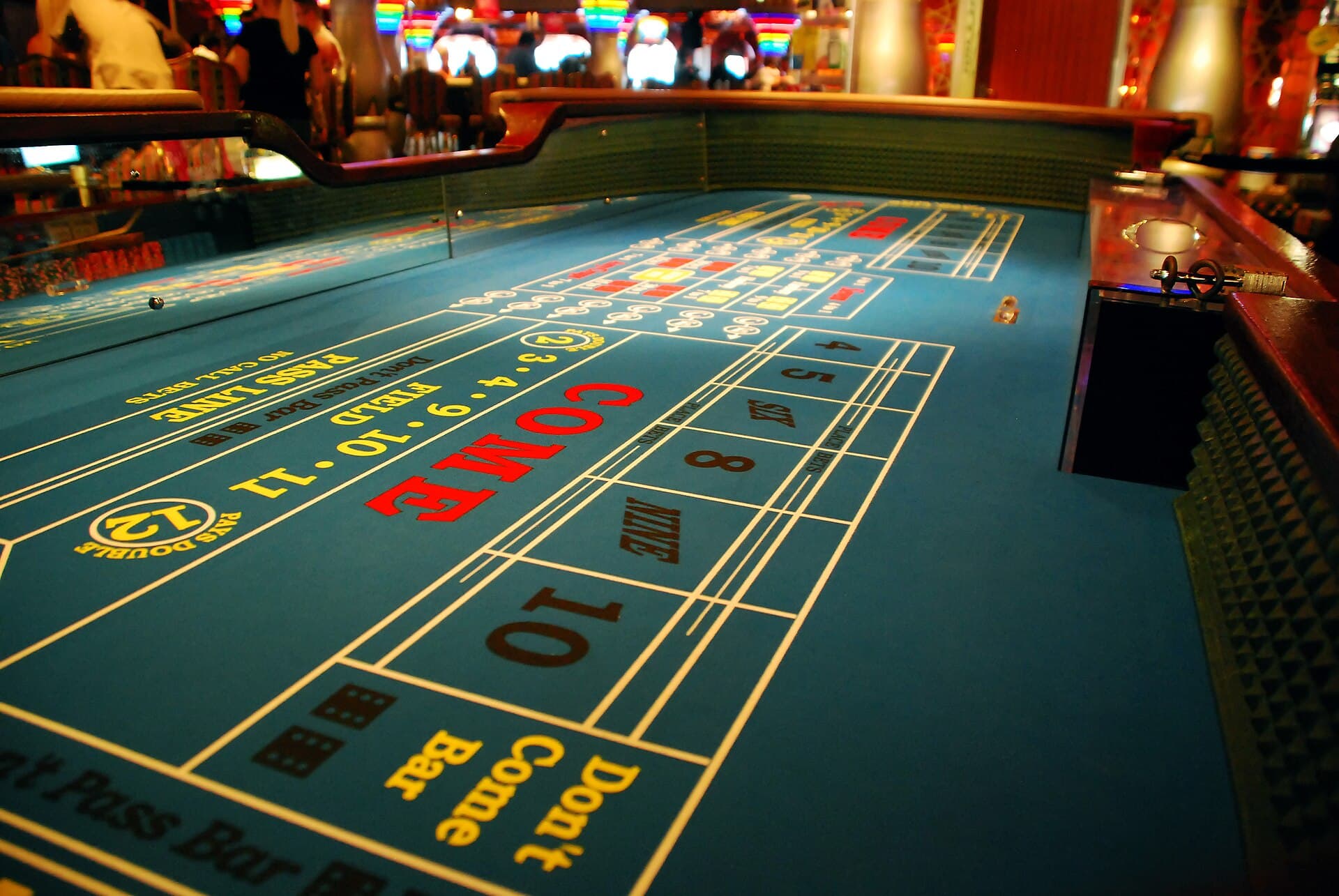
Craps proposition bets dominate the top of this list, and it's easy to see why once you compare payout structure to true odds. An "any seven" bet pays 4-to-1 on a roll that has a true probability of 6 in 36 (one-sixth, or roughly 16.67%) — meaning the payout, in true-odds terms, should be closer to 5-to-1 to be fair, and the 4-to-1 payout leaves a substantial gap. Single-roll proposition bets like 2, 12, 3, 11, and the various hardways bets follow the same pattern: a rare outcome, a payout that looks generous at first glance, and a true probability considerably lower than the payout would need to be to break even. See craps odds explained for the full dice-combination probability table behind these figures.
Baccarat's Tie bet earns its high edge through a similar mechanism applied to a card game rather than dice: an 8-to-1 payout on an outcome (both hands finishing with the same point total) that occurs considerably less often than 1 in 9 hands, producing a large gap between true probability and payout. Some tables offer a 9-to-1 Tie payout instead, which lowers the edge to roughly 4.85% — still well above Baccarat's Banker (~1.06%) or Player (~1.24%) bets, but meaningfully better than the 8-to-1 version. See baccarat tie bet explained and baccarat house edge explained.
American roulette's top-line bet (a five-number bet covering 0, 00, 1, 2, and 3) is a notable outlier even within American roulette, which already carries a higher edge than its European counterpart due to the extra double-zero pocket. The top-line bet's odd five-number structure doesn't divide evenly into the wheel's payout scheme the way other roulette bets do, pushing its edge to roughly 7.89% — well above the standard 5.26% edge shared by every other American roulette bet. See roulette house edge explained.
Table-game side bets, as a broad category spanning blackjack, baccarat, and other games, consistently run higher than the base game they're attached to — commonly in the 5%–15% range or more. Side bets like blackjack's Perfect Pairs or 21+3, or baccarat's various card-combination side wagers, typically pay large multiples on rare specific card combinations, following the exact same "rare outcome, outsized advertised payout, steep true cost" pattern seen in craps propositions and baccarat's Tie bet. See blackjack side bets explained and baccarat side bets explained.
The common thread: rare outcomes, big advertised payouts
Every bet on this list shares the same underlying structure: a large advertised payout multiple attached to a comparatively rare outcome. That structure is inherently appealing — a big number is exciting to look at on a betting layout or paytable — but it's also exactly the kind of structure that tends to carry a steep built-in cost, because a payout large enough to be exciting on a rare outcome is disproportionately likely to still fall short of what true odds would require to break even. This isn't a coincidence specific to any one game; it's a structural pattern that shows up wherever a casino offers a low-probability, high-payout bet alongside its more standard, lower-payout options.
Does this mean you should never play these bets?
Not necessarily, and it's worth being fair to the other side of this. A high house-edge bet isn't irrational to play occasionally — the appeal of a large, low-probability payout is a legitimate form of entertainment value in its own right, and plenty of experienced players place an occasional Tie bet or proposition bet specifically for that reason, fully aware of its cost. What matters is treating that awareness honestly: understanding that these bets are meaningfully more expensive on average than the alternatives sitting right next to them on the same table, and budgeting for them as a deliberate, small, occasional choice rather than a repeated core strategy. Using a betting system to try to manage the risk on these specific bets doesn't change their underlying cost either — the full explanation of why is in the casino betting strategies guide.
How to spot a high house-edge bet before you place it
A few practical signals reliably flag an expensive bet before you need to know its exact percentage. A payout multiple that looks unusually generous relative to how the bet is described (an 8-to-1 or higher payout on what sounds like a fairly ordinary outcome) is the clearest tell. Bets labeled as "proposition," "side," or "bonus" wagers, sitting apart from a game's core bets, are disproportionately likely to carry a higher edge than the base game itself. And any bet resolved by a single roll, spin, or card reveal rather than an ongoing hand tends to carry more variance and, often, a steeper cost than a bet that resolves over a longer sequence of play. None of these signals substitute for checking the actual published house edge where available, but they're a fast, useful filter for noticing when a bet is likely worth a closer look before committing to it repeatedly.
Frequently asked questions
What's the single highest house-edge bet at a standard casino? Craps' "any seven" single-roll bet, at roughly 16.67%, is among the highest edges on a standard casino floor, though several other craps proposition bets and baccarat's Tie bet sit in a similar range.
Why does baccarat's Tie bet have such a high house edge? Its 8-to-1 (or sometimes 9-to-1) payout falls well short of what the actual, lower probability of a tied hand would require to break even, producing an edge of roughly 14.4% (8-to-1) or 4.85% (9-to-1).
Are side bets always worse value than the main game? Generally yes — side bets in blackjack, baccarat, and other games commonly carry a house edge in the 5%–15%+ range, well above the base game's edge, because they typically pay large multiples on rare specific outcomes.
Is it ever reasonable to play a high house-edge bet? Yes, as an occasional, deliberate choice made with full awareness of its cost — the appeal of a large, low-probability payout is legitimate entertainment value, as long as it isn't treated as a repeated core strategy or expected to be cost-competitive with lower-edge alternatives.
How can I tell if a bet has a high house edge without knowing the exact math? Watch for unusually generous-looking payout multiples, bets labeled as "proposition" or "side" wagers, and single-roll or single-spin resolutions — all three are common signals of an above-average house edge.
Does a betting system help offset a high house-edge bet's cost? No — betting systems adjust bet size and timing, not the underlying true-odds-versus-payout-odds structure that determines a bet's house edge, so they don't reduce the cost of a high-edge bet in any mathematical sense.