Casino Games With the Lowest House Edge
A ranked comparison of the casino games with the lowest house edge, from blackjack and baccarat to video poker, and what drives the differences.
Published August 10, 2026
What makes a house edge "low"
Before ranking anything, it's worth being precise about what's being compared. House edge measures the average percentage of every dollar wagered that a casino keeps over the long run, and it varies not just by game but by specific bet within a game — "blackjack's house edge" really means "blackjack's house edge assuming perfect basic strategy and reasonably favorable table rules," and departing from either assumption changes the number considerably. With that caveat in place, the ranking below reflects the lowest-cost bets generally available on a standard casino floor, using the figures established in the casino odds & house edge guide.
The ranking
| Rank | Game / Bet | Approximate House Edge | Condition |
|---|---|---|---|
| 1 | Craps — Odds bet | 0% | Must accompany a pass/come or don't pass/don't come bet |
| 2 | Full-pay Deuces Wild (video poker) | Below 0% (positive for player) | Requires the specific full-pay table and perfect strategy |
| 3 | Full-pay Jacks or Better (9/6) | ~0.46% | Requires perfect strategy |
| 4 | Blackjack (perfect basic strategy, good rules) | ~0.5% | Requires memorized correct strategy |
| 5 | Craps — Don't pass / don't come | ~1.36% | No conditions beyond the bet itself |
| 6 | Craps — Pass line / come | ~1.41% | No conditions beyond the bet itself |
| 7 | Baccarat — Banker | ~1.06% | Standard 5% commission included |
| 8 | Baccarat — Player | ~1.24% | No conditions |
| 9 | Craps — Place 6 or 8 | ~1.52% | No conditions |
| 10 | French roulette — even-money bets (la partage) | ~1.35% | Requires la partage or en prison rule |
Why these specific bets sit at the bottom
Craps odds bets occupy the top spot because they're the one standard casino wager that pays exactly true mathematical odds, with zero built-in shortfall — a genuine, if narrow, exception to how virtually every other casino bet is structured. The catch is that odds bets can only be placed as a supplement to a pass line, don't pass, come, or don't come wager, which does carry its own edge, so the wager as a whole never reaches a true 0% blended edge, but the odds portion specifically does.
Full-pay video poker variants, played with perfect strategy, sit at the very low end (and, in the specific case of Full Pay Deuces Wild, slightly below zero) because their pay tables are precisely calculable, unlike a slot's opaque reel and feature structure, and because a portion of their total return depends entirely on player skill in the form of correct hold decisions. The "full-pay" qualifier matters enormously here — a 9/6 Jacks or Better machine (paying 9-for-1 on a full house and 6-for-1 on a flush) returns roughly 99.54% under perfect play, while an 8/5 or 6/5 version of the same game, differing only in those two specific payout figures, returns meaningfully less (roughly 97.3% and 95% respectively) despite looking nearly identical at a glance. See video poker odds and RTP explained for the exact pay table comparisons.
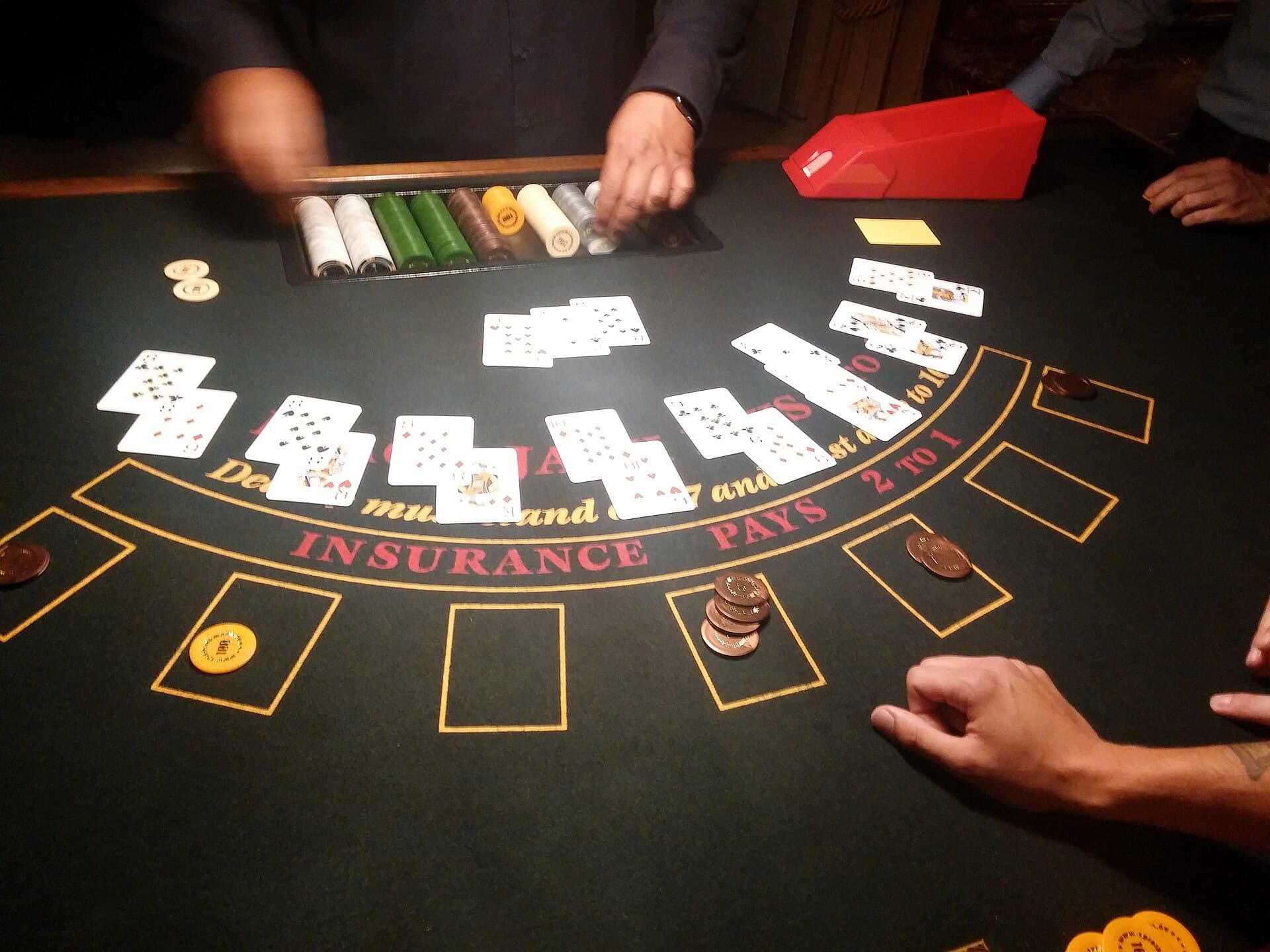
Blackjack under perfect basic strategy earns its spot through genuine decision-based skill — hit, stand, double, split, and surrender decisions that measurably change the odds when made correctly, following a memorizable chart that's been mathematically solved for optimal play against every dealer up-card and player hand combination. Deviating from correct strategy pushes the effective house edge up substantially, sometimes past 2%, so this figure specifically assumes the chart is followed accurately. See blackjack basic strategy and blackjack house edge explained.
Craps line bets and baccarat's two primary bets round out the list as low-edge options that require no special skill or strategy to access — you don't need to memorize anything to get baccarat's roughly 1.06% Banker edge or craps' roughly 1.41% pass line edge; you simply need to choose those specific bets over the many higher-cost alternatives available at the same table. This makes them particularly attractive for players who want a low-cost game without the decision-based learning curve blackjack or video poker require.
What these games have in common
A pattern emerges looking down this list: the lowest house-edge bets tend to be either the simplest possible wager on a game (a basic line bet, a basic banker/player choice) or a game that rewards precisely correct decision-making (blackjack, video poker). What they specifically avoid is complexity for its own sake — side bets, proposition bets, and specialty wagers layered on top of a base game consistently carry a much higher house edge than the base game itself, a pattern covered in the counterpart guide, casino games with the highest house edge.
Why "lowest house edge" isn't the only consideration
It's worth being clear that ranking games by house edge alone doesn't capture everything relevant to choosing what to play. Volatility, hit frequency, pace of play, and simple personal enjoyment all matter alongside cost, and a technically higher house-edge game that you genuinely enjoy more, played within a sensible bankroll plan, isn't a mathematical error just because a lower-edge alternative exists. This ranking is best used as one input into game selection — the pure cost-minimization angle — rather than the sole basis for it. How to choose a casino game builds a fuller decision framework incorporating volatility and pace alongside house edge.
It's also worth noting that low house edge doesn't mean low variance. Blackjack, despite its low ~0.5% edge, still produces real losing streaks in the ordinary course of play, since a player using correct strategy wins fewer than half of all hands dealt. A low house edge affects your expected long-run cost, not how smooth or bumpy any individual session feels — that's a separate concept, covered in variance in casino gambling explained.
Slots: not directly comparable, but worth a note
Slots don't appear in the ranking above because their RTP varies enormously by individual title rather than clustering around a single game-wide figure the way table games do — typical online slot RTPs range from roughly 94% to 98%, a house edge range of about 2% to 6%, which is meaningfully higher on average than the table games listed above but can occasionally approach the lower end of that range on specific titles. Checking a specific slot's published RTP directly, rather than assuming "slots" as a category sit at any single figure, is the accurate way to compare a specific slot against the games above. See slot RTP explained.
Frequently asked questions
What's the single lowest house edge bet at a standard casino? Craps odds bets, at a mathematically exact 0% house edge, though they require an accompanying pass line or don't pass bet, which carries its own edge.
Does blackjack really have such a low house edge? Yes, but only under perfect basic strategy and reasonably favorable table rules — roughly 0.5%. Playing without correct strategy, or on a table with unfavorable rule variations like a 6:5 blackjack payout instead of 3:2, pushes that figure up considerably.
Can video poker really have a house edge below 0%? In narrow, specific cases — certain Full Pay Deuces Wild tables under perfect strategy — yes, calculating to a small positive expected value for the player. This requires both the exact full-pay table and flawless optimal play to realize.
Is baccarat a low house-edge game? Its Banker bet, at roughly 1.06%, is genuinely among the lower-cost bets on a casino floor, and it requires no strategy or skill to access, unlike blackjack or video poker.
Are low house-edge games always lower variance too? No — house edge and variance are independent. Blackjack has a low house edge but still produces normal, sometimes lengthy losing streaks, since it doesn't win a majority of hands even under perfect strategy.
Should I only play the lowest house-edge games? Not necessarily — house edge is one factor among several (volatility, pace, personal enjoyment) worth weighing. It's the right priority if minimizing cost is your main goal, but it's a personal trade-off rather than a universal rule.