Roulette Table Layout Explained
A visual walkthrough of the roulette table — the number grid, outside betting boxes, racetrack, and how the wheel connects to the layout.
Published July 30, 2026
What this guide covers
The roulette table — often called "the layout" — can look busy the first time you see it: a grid of numbers, a surrounding strip of boxes, sometimes an oval track, all next to a spinning wheel. Once you know what each zone is for, it's actually one of the simplest layouts in the casino. This guide walks through every section of the table piece by piece. For how each bet type placed on this layout actually pays out, see roulette betting options explained; for how the wheel itself is built, see roulette wheel explained.
The two main zones
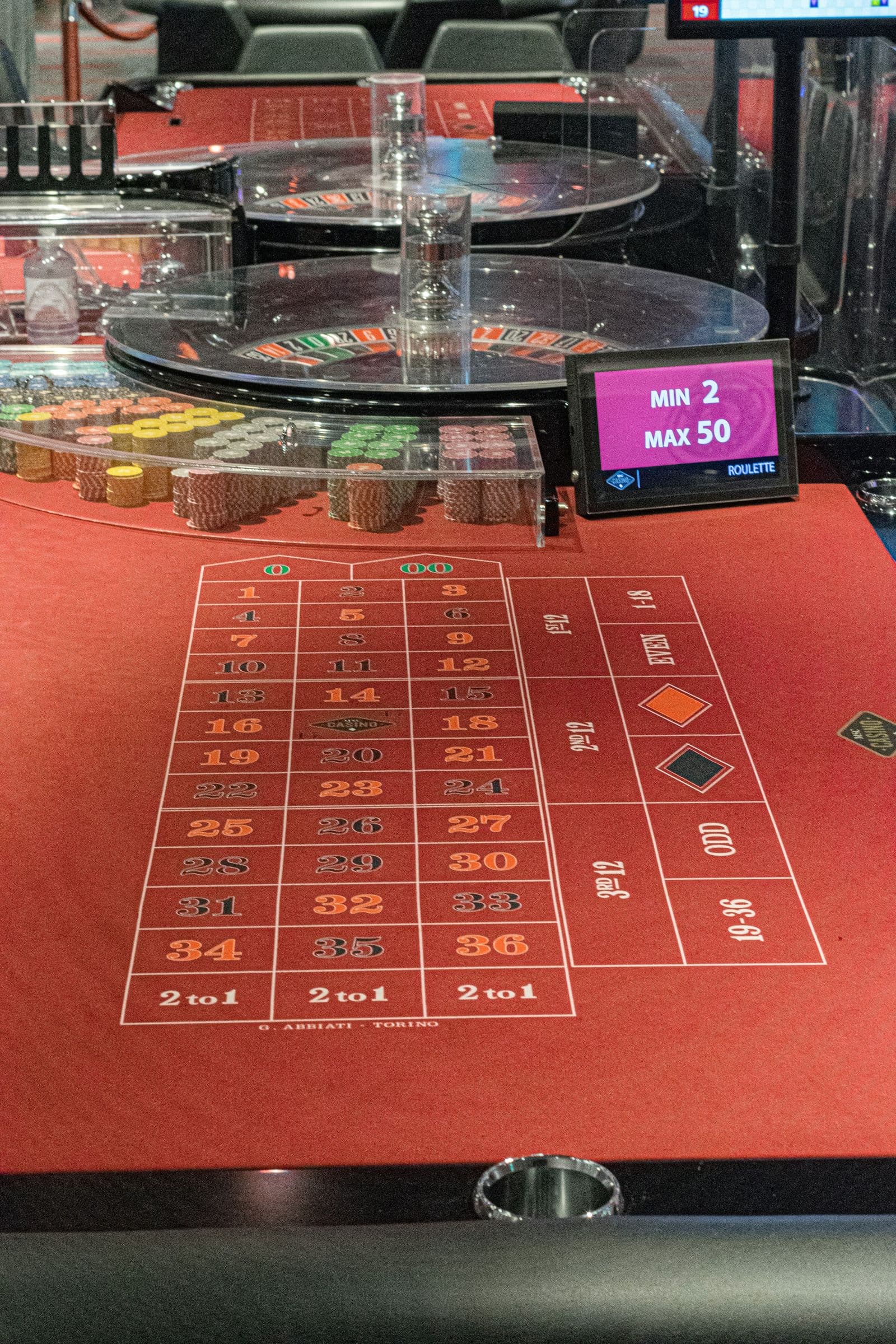
Every roulette layout splits into two broad areas. The number grid — 1 through 36, arranged in three columns of twelve, with the zero (and 00, on American tables) at one end — is used for inside bets placed directly on or between specific numbers. Surrounding that grid is a strip of boxes used for outside bets: red/black, odd/even, high/low, dozens, and columns. Everything on the layout falls into one of these two zones.
The number grid
The number grid is the heart of the table. Numbers run in three rows across, columns of twelve running the length of the layout, colored to match the wheel — red and black alternating, with zero (and 00) set apart in green at the head of the grid. This arrangement isn't random: it's designed so red, black, odd, and even numbers are spread out visually in a way that makes placing inside bets straightforward, even though the numbers' physical order on the wheel itself is completely different, covered in roulette wheel explained.
Straight-up and split spots
A straight-up bet goes directly in the center of a single number's box. A split bet goes on the line shared between two adjacent numbers — horizontally or vertically, depending on which two numbers you're covering. These are the two most granular bet placements on the grid, and they're also the easiest to place slightly off-target if you're not yet familiar with a specific table's exact spacing, so it's worth taking a moment to confirm your chip landed where you intended.
Street, corner, and six-line spots
A street bet — covering a full row of three numbers — is placed on the outer edge line of that row. A corner bet, covering four numbers that meet at a single point, goes right on that shared corner. A six-line bet, covering two adjacent rows (six numbers total), goes on the outer edge line shared between those two rows. Each of these spots is a specific, fixed position on the grid — you can't build a custom four- or six-number combination outside of these predefined shapes.
The zero and double-zero boxes
On a European layout, zero sits at the head of the grid in its own green box. On an American layout, both 0 and 00 sit there side by side. These are treated as their own numbers for straight-up betting purposes, and they're also the numbers involved in trio and (on American tables) basket bets — special bet types covered fully in roulette betting options explained.
The outside betting boxes
Running along the side and end of the number grid, the outside boxes cover the broader category bets: red, black, odd, even, 1–18 (low), and 19–36 (high) sit in one strip, typically split into two rows of three boxes; dozens (1st 12, 2nd 12, 3rd 12) and columns sit in their own dedicated boxes at the end of each relevant section of the grid. These are the bets most beginners start with, since they're visually simple and easy to track — full detail on how they compare to inside bets is in inside vs outside bets explained.
Reading the dozens and columns boxes
Dozens boxes are typically labeled "1st 12," "2nd 12," and "3rd 12," positioned beneath the corresponding third of the number grid. Columns boxes sit at the very end of each of the three vertical columns of numbers, usually marked "2 to 1" to indicate the payout. It's easy to mix these two up at a glance since both cover twelve numbers and pay the same 2:1 odds — the difference is purely which twelve numbers each one groups together.
The racetrack view
Many European and French tables offer an additional oval layout called the racetrack, mirroring the wheel's actual physical number order rather than the grid's arrangement. This is used specifically for call bets like Voisins du Zéro and Tiers du Cylindre, and for neighbor bets covering a number plus its physical neighbors on the wheel. Not every table includes this view, and it's entirely optional — nothing about standard grid betting requires it. Full detail on call bets specifically is in roulette rules explained.
How the layout connects to the wheel
The layout sits directly beside (or, on many physical and some digital tables, at the head of) the wheel itself, positioned so the dealer can comfortably reach both the betting area and the wheel in one motion. On online interfaces, this is often represented as a wheel graphic sitting above or beside the betting grid, sometimes collapsible to give the grid more screen space, particularly on mobile layouts where screen space is limited.
Why the grid's number order differs from the wheel's
A detail that trips up newer players: the numbers on the flat betting grid run in simple ascending order (1, 2, 3...36), but the numbers on the physical wheel follow a completely different, seemingly scrambled sequence. This is intentional — the wheel's order is designed to spread red, black, odd, and even numbers evenly around its circumference, while the grid's order is designed purely for ease of betting. The two systems serve different purposes and were never meant to match.
Table limits shown on the layout
Most tables display minimum and maximum bet information somewhere near the layout — often a small sign or digital display showing separate limits for inside and outside bets. Checking this before you sit down (or open an online table) tells you immediately whether the stakes match your budget, and it's worth doing as a habit rather than discovering the limits only after trying to place a bet that's rejected.
Mobile layout differences
On a phone screen, the full table layout is usually compressed or made scrollable, since a full-size grid, outside boxes, and racetrack all at once won't fit comfortably on a small screen. Most mobile interfaces prioritize the number grid and core outside bets by default, tucking the racetrack view a layer deeper in a menu or toggle.
Frequently asked questions
Why are the numbers on the table grid in a different order than on the wheel? The grid's ascending order is designed purely for easy betting, while the wheel's order is designed to spread red, black, odd, and even numbers evenly around its circumference — the two serve different purposes and were never intended to match.
Do I need to use the racetrack view to play roulette? No — it's entirely optional and only relevant for call bets and neighbor bets; standard inside and outside bets work completely fine using just the main grid.
Why do dozens and columns look so similar on the layout? Both cover twelve numbers and pay 2:1, but dozens group numbers by consecutive blocks (1–12, 13–24, 25–36) while columns group them by the grid's vertical arrangement — different groupings of the same size.
Is the table layout the same on every roulette variant? The core grid and outside betting boxes are consistent across European, French, and American tables, with American layouts adding a 00 box and some variants adding extra bet types layered on top of the standard layout.
Where can I check a table's betting limits? Most tables display this near the layout itself, either as a physical sign or a digital display — worth checking before you start playing to confirm the stakes suit your budget.